

Apology Message Templates & Examples: How to Write Sincere Sorry Messages
By Ortfelia Gifts
Apology messages can be pivotal in mending relationships and rebuilding trust. This guide covers effective apology message templates and examples for different relationships, plus tips for pairing your words with a gift. Looking for the gift itself? See our Top 10 Apology Gifts roundup or Apology Necklace guide.
Sorry Message Examples for Different Relationships
Every relationship calls for a different tone and level of sincerity. Start by acknowledging the mistake clearly, follow with a sincere expression of regret, then invite dialogue.
- For a romantic partner: "I'm truly sorry for the hurt my words caused during our conversation. Your feelings are important to me, and I want to understand your perspective."
- For a friend: "I'm really sorry for letting you down when you counted on me. I value our friendship and hope to discuss how we can move forward together."
- For a colleague: "I apologize for my oversight in the project. I appreciate your hard work and hope we can resolve this issue positively."
How to Write an Effective Apology Note
Three elements matter most:
- Acknowledgment — clearly state what you did wrong.
- Regret expression — show genuine remorse for how your actions affected the other person.
- Solution offering — propose how you intend to rectify the situation or prevent it from happening again.
Pairing a Message with a Gift
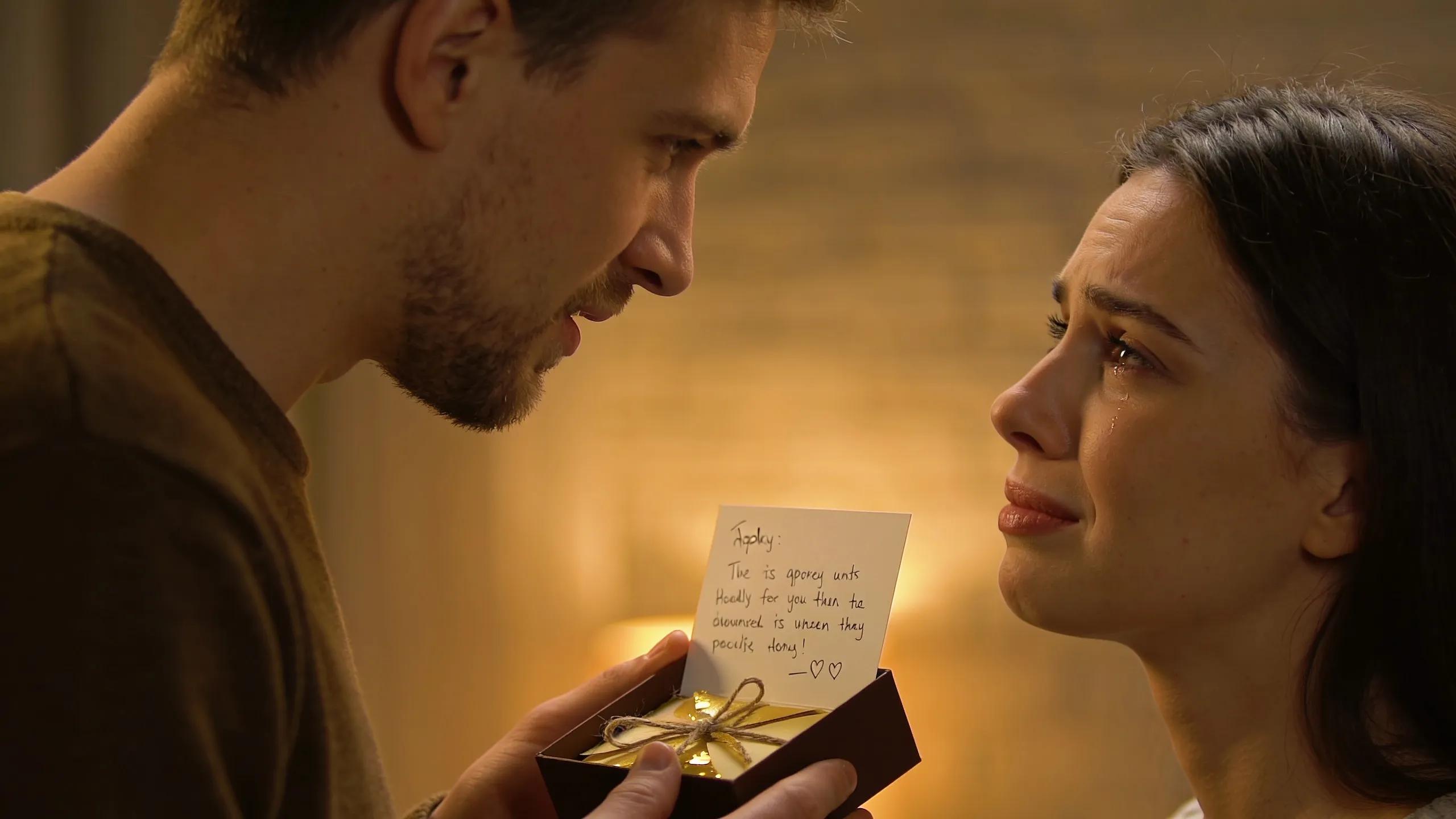
Combining a personalized gift with your message amplifies the emotional impact. Reference the gift directly in your note — for example, if gifting flowers: "Just as these flowers bring brightness, I hope to bring joy back into our relationship." Jewelry works especially well here; see personalization and engraving options in our Apology Necklace guide.
Common Questions
How do I apologize sincerely with words?
Focus on the impact of your actions and use direct language. Instead of "I'm sorry if you felt that way," try "I'm sorry for what I said and how it affected you." This clarity signals genuine accountability.
5 Heartfelt Sorry Texts for Loved Ones
- "I'm so sorry for being distant; I miss you and want to talk things out."
- "I apologize for my words; they were thoughtless, and I value our friendship too much to hurt you."
- "I regret my actions during our last conversation; I'm here to listen whenever you're ready."
- "I'm truly sorry I can't be there for you right now; let me know how I can support you from afar."
- "My apologies for not prioritizing your needs; I realize now how important they are, and I'll do better."
Want to know the best time to send this message alongside a gift? See our Timing & Cultural Etiquette guide.
Matching the Message to the Severity of the Mistake
Minor Friction (forgotten plans, short temper, small oversight)
"I know I was short with you earlier, and that wasn't fair. I'm sorry — you didn't deserve that."
Short, direct, and doesn't over-explain. Over-apologizing for small things can come across as performative.
Moderate Conflict (a broken commitment, a hurtful comment)
"I've been thinking about what I said, and I understand why it hurt you. I should have chosen my words more carefully, and I want to do better going forward."
This adds a forward-looking commitment, which minor apologies usually don't need but moderate ones benefit from.
Serious Breach (broken trust, a significant betrayal)
"I know words don't undo what happened, and I don't expect this message to fix things. I want you to know I take full responsibility, and I'm ready to talk through whatever you need to move forward, on your timeline."
For serious situations, avoid over-promising a quick resolution — acknowledging that repair takes time tends to land as more credible than an upbeat, tidy apology.
What to Avoid in an Apology Message
- "I'm sorry you feel that way" — this shifts responsibility onto the other person's reaction instead of owning your action.
- "I'm sorry, but..." — any justification after "but" tends to cancel out the apology that came before it.
- Over-explaining — a long justification can read as more focused on your own guilt than the other person's feelings.
- Making it about you — "I feel terrible" centers your emotions; "I'm sorry I hurt you" centers theirs. The second lands better.
How Long Should an Apology Message Be?
There's no fixed rule, but as a general guide: a text or card can stay to two or three sentences for minor situations, while a more serious apology often needs a few short paragraphs to properly acknowledge what happened, express regret, and offer a way forward. Padding a message with extra length to seem more sincere usually has the opposite effect.
Written Note vs. Spoken Apology vs. Text
A handwritten note paired with a gift works well when you want something the recipient can keep and revisit. A text is appropriate for smaller, everyday friction where immediacy matters more than formality. For anything serious, a spoken conversation should come first — a written message can support it, but shouldn't replace it.
Frequently Asked Questions
Should I apologize in a group chat or publicly?
No — apologies land better privately, directed at the person affected. A public apology can feel more about managing your own image than genuinely making amends.
What if I don't know exactly what I did wrong?
Ask directly rather than guessing in your message. "I know I upset you, and I want to understand exactly what happened so I don't repeat it" is more honest than a vague, catch-all apology.
Is it ever too late to send an apology message?
Rarely. A late but genuine apology is usually better received than none at all — though it's worth acknowledging the delay directly rather than pretending no time has passed.
Adapting Tone Across Communication Channels
The same core apology needs to shift slightly depending on where it's delivered:
- Text message: Keep it brief and direct — texts read as more casual by default, so overly formal language here can feel oddly stiff.
- Handwritten card: Slightly more considered language works well, since the format itself already signals effort.
- Email (for professional apologies): Lead with the acknowledgment in the first line — busy recipients may not read past the opening if it doesn't get to the point quickly.
- In person: Keep the spoken version simpler than a written one would be — over-rehearsed language can come across as insincere when spoken aloud.
When Words Alone Aren't Enough
Some situations call for changed behavior more than well-chosen words. If this is a repeat issue, the message should acknowledge the pattern directly rather than presenting the apology as if it's an isolated incident: "I know I've said this before, and I understand why that makes this harder to accept. Here's specifically what I'm going to do differently this time." Concrete, specific commitments carry more weight than general promises to "do better."
Practicing Before You Send It
For a high-stakes apology, it's worth reading your message aloud before sending it — wording that looks fine on a screen can sound stiff or overly rehearsed when spoken, and vice versa. If a phrase feels awkward out loud, it will likely feel that way to the recipient too.